
Selling, trading and grading
How to Value Pokémon Cards in the UK
By TCG Emporium Editorial Team · Published 17 October 2026 · Updated 18 October 2026
To value a Pokémon card, identify the exact card by expansion and collector number, then find recent completed sales of that same card in the same language and condition. Read the middle of those sales rather than the highest, and take off what selling will cost you. Live listings show what sellers hope for. Completed sales show what buyers paid, and even those need sorting first. This guide takes each step in turn, using the three Charizard ex cards in the 151 expansion as the running example. It also sets out the method every price in our guides follows.
Identify the exact card variant first
A name is not enough to look a card up. The 151 expansion holds three cards called Charizard ex, and all three have 330 HP and the same two attacks. They are 6/165 (Double Rare), 183/165 (Ultra Rare) and 199/165 (Special Illustration Rare). Sales of one tell you nothing about the other two.
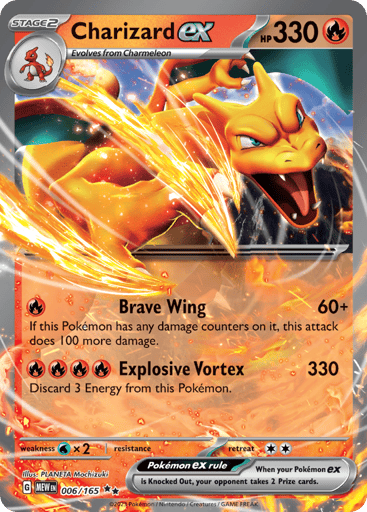
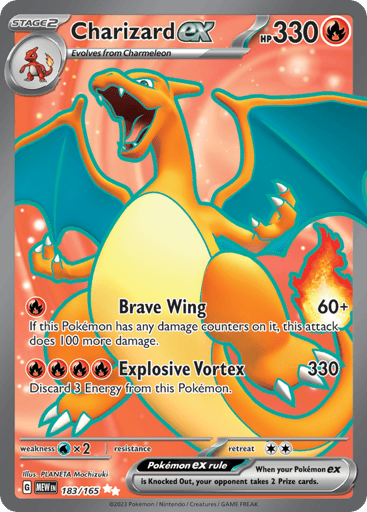
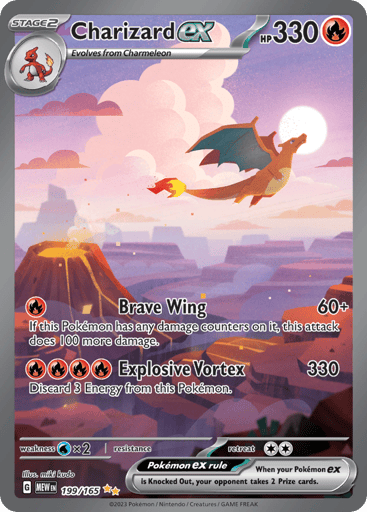
Read the bottom of the card before you search. The collector number settles which of the three you hold, and the set symbol beside it settles the expansion. The illustrator credit helps less than you might expect, because PLANETA Mochizuki drew both 6/165 and 183/165 while miki kudo drew 199/165. So the illustrator separates 199/165 from the other two, but only the number and the rarity separate 6/165 from 183/165. Confirm the rarity in the official Pokémon TCG Card Database rather than guessing it from the finish.
The difference is not academic. Here is what the three cards sold for raw on eBay in mid-October 2026. All are English, ungraded, and single-card completed sales.
| Card | Rarity | Recent raw sales | Middle sale | Sales read |
|---|---|---|---|---|
| Charizard ex 6/165 | Double Rare | £4 to £7 | £6 | 8, on 15 and 16 Oct 2026 |
| Charizard ex 183/165 | Ultra Rare | £19 to £32 | £27 | 5, on 16 Oct 2026 |
| Charizard ex 199/165 | Special Illustration Rare | £217 to £251 | £243 | 6, on 17 Oct 2026 |
Same name, same HP, same attacks, and a fortyfold spread between the cheapest and the dearest. Converted from US dollars at £0.7499 to the dollar (16 October 2026). Method below.
Printings of the same number can differ as well. Modern sets print many cards in a reverse holo version that shares the standard card's number, and our guide to holo and reverse holo cards shows how to tell them apart. Older cards can carry a 1st Edition stamp that a later printing of the same card lacks. If any mark on your card differs from the card in the sale you are reading, it is not the same card.
Choose completed sales that actually match
Match language first. An English card and a Japanese card are separate products even when the artwork is the same, and our guide to Japanese and English cards explains how they differ. Then match condition. Cardmarket grades raw cards on a seven-step scale (Mint, Near Mint, Excellent, Good, Light Played, Played, Poor) and states that visible clouding alone keeps a card out of Near Mint. A Near Mint sale is not evidence for a Played copy, and a seller's description is not evidence until the photos agree with it.
Graded cards are a separate category. A card in a grading company's case sells on its label as much as on the card inside, so compare graded sales only with sales from the same company at the same grade. Each company publishes its own standard. CGC Cards, for example, places a Pristine 10 above its Gem Mint 10 and reserves the Pristine label for cards that are flawless under ten-times magnification. Keep raw and graded sales in separate lists, and see our UK grading guide for how the companies differ.
Finally, separate transactions from listings. A live listing is an ask, and one that has sat unsold for weeks is an ask nobody accepted. eBay's own help pages point sellers to completed listings in Advanced Search to see what similar items have sold for. Check that each result ended in a sale rather than expiring, and skip lots of several cards, because a lot cannot tell you what any one card fetched.
Read a small set of comparable observations
Set your inclusion rules before you look, so the sales do not choose themselves. For a raw Near Mint 6/165, these rules would do.
- Same expansion and collector number, confirmed from the photo rather than the title.
- Same language as your card.
- Same condition band for a raw card, or the same company and grade for a graded one.
- A completed sale, not a live or expired listing.
- Sold within the last 90 days, or the last 30 for a set released this year.
- One card per sale, with no lots.
Aim for five to ten sales that pass, and note the date and venue of each. Take the middle figure rather than the top or the average. The gap between the lowest and highest included sale is your uncertainty, and it stays attached to the estimate.
The worksheet below applies those rules to a search for 6/165. The rows are illustrative, written to show each rule at work, and are not real sales. Fill in one like it for your own card and keep the reason column honest.
| Identity match | Sale date | Condition | Language | Grade | Sale source | Included or excluded | Reason |
|---|---|---|---|---|---|---|---|
| 6/165 Double Rare, confirmed from photo | 2 weeks before the search | Near Mint, photos agree | English | Raw | Completed sale, single card | Included | Passes every rule |
| 6/165 Double Rare, confirmed from photo | 7 weeks before the search | Near Mint, photos agree | English | Raw | Completed sale, single card | Included | Older, but inside 90 days |
| 6/165 Double Rare, confirmed from photo | 3 weeks before the search | Near Mint | English | Graded 10 | Completed auction | Excluded | Graded, a separate category from a raw card |
| 183/165 Ultra Rare | 1 week before the search | Near Mint | English | Raw | Completed sale, single card | Excluded | Same name and illustrator as 6/165, different card |
| 199/165 Special Illustration Rare | 1 week before the search | Near Mint | English | Raw | Completed sale, single card | Excluded | Same name, different card |
| 6/165 Double Rare, confirmed from photo | 4 weeks before the search | Described Near Mint, photo shows whitening on the back edge | English | Raw | Completed sale, single card | Excluded | Photo does not match the description |
| Japanese Charizard ex | 2 weeks before the search | Near Mint | Japanese | Raw | Completed sale, single card | Excluded | Language differs |
| 6/165 in the title, no clear photo | 2 weeks before the search | Unknown | English | Raw | Completed sale, single card | Excluded | Identity and condition cannot be confirmed |
| 6/165 Double Rare, confirmed from photo | Ended 3 weeks before the search | Near Mint | English | Raw | Listing ended unsold | Excluded | An ask, not a sale |
| 6/165 with a second card | 1 week before the search | Near Mint | English | Raw | Completed sale, two-card lot | Excluded | One card's share cannot be separated |
| 6/165 Double Rare, confirmed from photo | 5 months before the search | Near Mint | English | Raw | Completed sale, single card | Excluded | Outside the 90-day window |
Handle sparse or inconsistent evidence
Sometimes fewer than three sales pass the rules. Widen the time window first and say that you have. If that is still not enough, widen the condition band by one step and label the estimate as resting on neighbouring conditions. Never widen the language or the card number, because then you are no longer valuing the card you hold.
A card with no recent matching sales does not have a known value. It has a last known sale and a date, and anything beyond that is a guess you should label as one.
When the sales you have disagree, look for a reason before you average them. An auction that ended at an awkward hour can close low, and a listing with poor photos can put buyers off. If you cannot explain an outlier, leave it in and widen your range rather than deleting it to make the answer tidier. State the result as a range with the date of your search beside it, since a figure with no date cannot be checked later.
Account for selling costs
What a buyer pays and what you keep are different numbers, and the gap depends on where you sell. The table gives the published position for UK private sellers on two venues, as checked on 18 October 2026. Fees change, so read the source page before you list.
| Venue | What the venue says a UK private seller pays | Source | Date checked |
|---|---|---|---|
| eBay | Selling is free for UK-based private sellers (excluding motors). No final value fee or regulatory operating fee when an item sells. 300 free listings a month, then 35p for each additional listing. A 3% international fee on the sale total when the item is delivered outside the UK. Optional upgrades such as a reserve price and Promoted Listings carry their own fees. eBay says its fees include VAT at 20%, though Promoted Listings fees can have VAT added on top. | ebay.co.uk/help/selling/fees-credits-invoices/selling-fees?id=4364 | 18 October 2026 |
| Vinted | Zero selling fees, so the seller keeps what they earn. Buyers pay a Vinted fee on top, which tends to hold down what they will offer. | vinted.co.uk/how_it_works | 18 October 2026 |
Postage comes out of the same sum. A card you would be upset to lose should go by a tracked service with compensation, so check Royal Mail's current prices before you set your postage charge, and our guide on how to post Pokémon cards covers the packaging. If you grade a card before selling it, add the grading fee and postage both ways, and remember that the grade is not known until the card comes back.
Put the costs against the estimate with the assumption written down. As an illustration only, suppose fees and postage come to a tenth of the sale. The figure to expect to keep is then the middle of your included sales less that tenth. Write the assumption beside the result so that you, or the person you sell to, can see it.
Use specialist pricing resources
Start with the official Pokémon TCG Card Database on pokemon.com. It shows the expansion, number, rarity and illustrator of each card, which is how you confirm that the card in a sale is the card in your hand. It carries no prices, and for identity that is a strength.
For the sales themselves, eBay's completed listings show what buyers paid on that venue. Specialist price-tracking sites gather completed sales from several venues and chart them by grade. They are a starting point rather than an answer, and only as good as the sales behind the chart.
Before trusting a tracker, test it on a card you have already worked out by hand. A good one shows the individual dated sales behind each figure and keeps raw and graded cards apart. If a site gives a single figure with nothing behind it, treat that figure as an opinion.
Move from an estimate to a sale or purchase
An estimate is the start of a conversation, not the end of one. If you are buying, it tells you what a fair ask looks like, and the seller's photos tell you whether this copy meets it. No seller and no shop can promise what a card will fetch.
If you are selling, your worksheet gives you a range and the fees table tells you what that range looks like after costs. The next page to read is our guide to how to sell Pokémon cards, which covers choosing a venue and writing a description that matches what arrives.
How our guides price cards
Every value on TCG Emporium follows the same rules, so a figure in one guide means the same thing as a figure in another.
- Completed sales only. We read sold prices, never asking prices. The sales come from CardTrack's sold-sales ledger, which records eBay completed sales from the UK, US and other eBay sites in US dollars.
- Recent and dated. Chase-card tables use the most recent raw sales of each card, up to ten, and print the dates they sold.
- A range, not a single number. With six or more raw sales we drop the single highest and lowest before quoting the range, and we give the middle sale beside it.
- Raw and graded kept apart. Graded figures are the median of completed sales at that exact company and grade, and we only quote them where real sales exist.
- English unless we say otherwise. Japanese cards, promos and other printings are separate cards.
- Pounds at a stated rate. Dollar sales are converted at the rate and date given on each page. The rate moves, and so would the pound figure.
- No forecasts. A past sale says what a buyer paid. It does not say what the next one will.
For the top end of the hobby, see the biggest Pokémon card sales ever. Where too few sales exist, we say so rather than quote a number. Prices move quickly after a set launches, so check the date beside any figure before you lean on it.
Next review due 18 January 2027. We update this guide sooner when eBay or Vinted change their UK fees, or we change how our guides price cards.
Sources
Facts on this page were checked against these sources on the dates shown.
- Charizard ex - 151 - TCG Card Database (pokemon.com) · pokemon.com · checked 18 October 2026
- Charizard ex - 151 - TCG Card Database (pokemon.com) · pokemon.com · checked 18 October 2026
- Charizard ex - 151 - TCG Card Database (pokemon.com) · pokemon.com · checked 18 October 2026
- Card Condition - Cardmarket Help · help.cardmarket.com · checked 18 October 2026
- Grading Scale - CGC Cards · cgccards.com · checked 18 October 2026
- Selling fees for private sellers - eBay UK Help · ebay.co.uk · checked 18 October 2026
- Pricing your items - eBay UK Help · ebay.co.uk · checked 18 October 2026
- How Vinted works - Vinted · vinted.co.uk · checked 18 October 2026